Caribbean Roots
Alibis, Angles, and Tales from the Tropics
— Jimmy Buffett
From: That’s my story and I’m stickin’ to it.
If this story gets you dreaming about the Caribbean, I’ve put together a collection of island guides based on places I’ve been fortunate enough to explore over the years. They’re less about checking off attractions and more about helping you decide which island feels right for you, and where I’d stay once you get there.
The Decision
People sometimes ask how I ended up living on an island in the Mediterranean.
The answer starts on a different island.
Actually, it starts before that.
I grew up in Wisconsin.
I had a pretty fairytale childhood. As an only child, I never felt like I was missing anything. My parents created a very full world for me. We traveled. We vacationed. Looking back, I couldn’t have asked for a better place to grow up.
Then I went to college.
For the first time, I was surrounded by people who had grown up somewhere else. New York. Washington, D.C. California. Europe. South America.
Their lives sounded different from mine, and I found myself spending less time with people who looked like me and more time with people who didn’t.
I was curious.
That curiosity never really left.
After graduation, the economy wasn’t exactly rolling. It was the early 2000s. September 11 had changed everything. Jobs were scarce. Everyone seemed to be scrambling for whatever came next.
I decided that “next” was New York, and convinced myself I wanted to be a lawyer.
Looking back, I realize I wasn’t chasing law school nearly as much as I was chasing another island.
Law school was the alibi.
Manhattan was the destination.
It worked. I loved New York almost immediately.
Everything I’d imagined about the city turned out to be true. The energy. The pace. The feeling that every subway ride introduced you to another version of the world.
It was exactly where I needed to be.
I also realized, almost as quickly, that I didn’t want the life waiting for me on the other side of graduation.
I did well in school. Better than I expected.
I interviewed with firms, sat across polished conference tables, and listened to people describe careers they’d spent years building.
I kept waiting to feel excited. I never did.
One afternoon, I walked out of class and wandered into the Manhattan Yacht Club.
That decision changed my life.
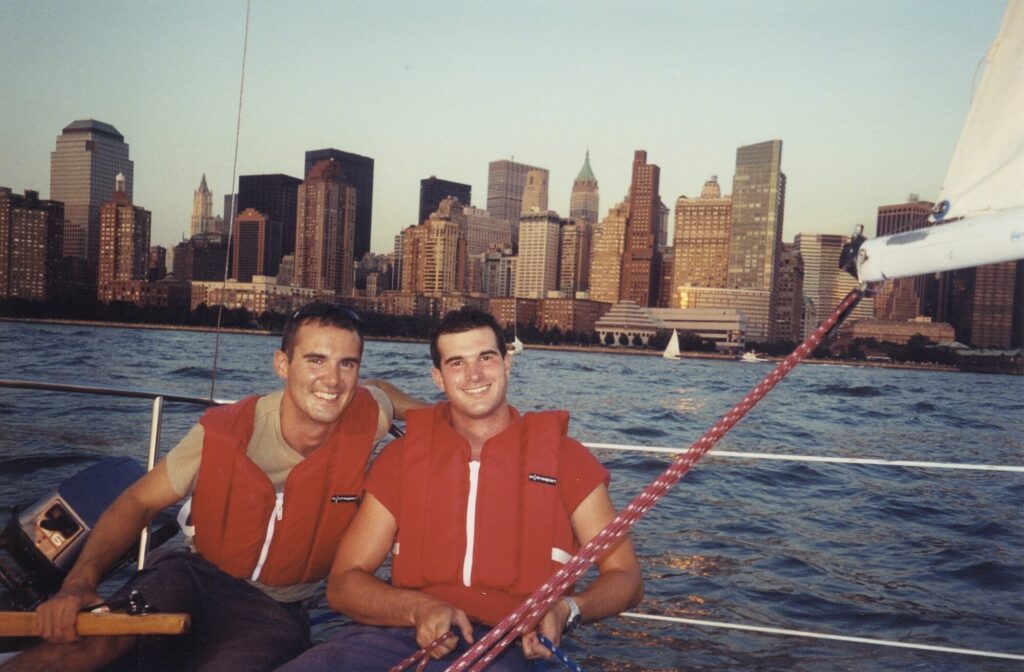
I’d spent my college years sailing at the University of Wisconsin, so I figured teaching sailing for the summer would be a fun way to spend a few months.
Instead, I found people who had built their lives around the water.
I started teaching sailing, cleaning boats, driving launches, fixing whatever needed fixing.
It was supposed to be a summer job.
Instead, it became the first time I found people who were living the kind of life I secretly wanted.
Nobody cared what your title was.
They cared whether you showed up, whether you knew your job, whether you’d stay late to help, whether you could laugh at yourself after a long day on the water.
I still work with some of those people more than twenty years later.
That summer also confirmed something my parents had been telling me since I was a kid.
Do what you love.
The money will figure itself out.
It’s simple advice. Maybe too simple.
But it’s quietly shaped almost every major decision I’ve made since.
By the end of that summer, I knew I wasn’t going back to law school, and I wasn’t staying in New York either.
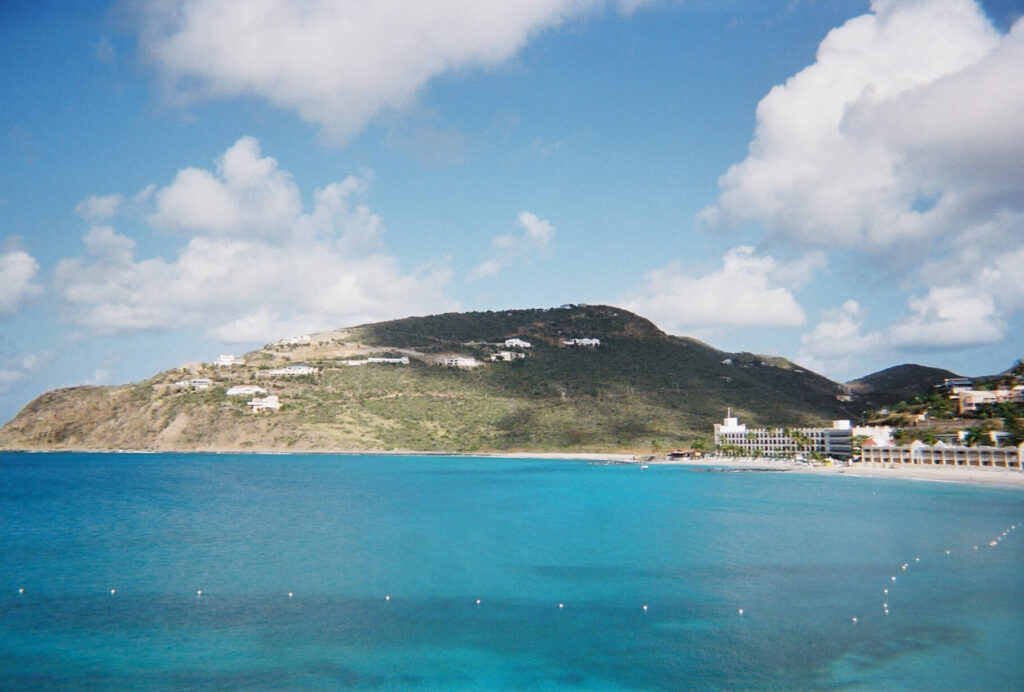
For reasons I couldn’t have explained then, I kept thinking about Sint Maarten, where I’d spent one week during a college spring break on a single sailing excursion.
That was all it took.
I remembered the heat, the salt drying on my skin, the mix of Dutch, French, English, and Caribbean cultures packed onto one small island.
Mostly, though, I remembered the feeling that life moved to a different rhythm there.
So I called the company that operated the old America’s Cup boats I’d sailed on during that trip.
To my surprise, they remembered me. Even more surprising, they offered me a job.
Then came the harder conversations: calling my parents, explaining that I was leaving law school, moving to a Caribbean island, and taking a job that paid almost nothing.
None of it fit the plan.
I remember expecting more resistance than I got. Instead, my parents started asking practical questions.
Where was I going to stay? How long did I have a place to live? Did I have enough money?
The answer to most of those questions was, “I’m not really sure.”
My parents had always encouraged me to follow what interested me, even when it didn’t make much sense on paper, and this time wasn’t any different.
They booked me a hotel for my first week. Seven nights.
“That should give you enough time to figure things out.”
That was the extent of the plan.
A few weeks later, I checked one bag at JFK, bought a one-way ticket, and climbed on the plane.
At the time, it just felt like another adventure.
The Landing
I landed in Sint Maarten with one duffel bag and exactly seven nights paid for.
That was the plan: on the eighth morning, I either had somewhere to live or I didn’t.
People ask me now if that felt reckless.
It didn’t. It felt exciting.
This was 2003. There wasn’t much internet: no smartphones, no Google Maps, no reviews, no way to spend three months researching the decision.
You bought the ticket, then you figured it out.
That uncertainty wasn’t something to avoid. It was the whole point.
I stepped off the plane into the Caribbean heat and immediately knew this wasn’t vacation anymore.
I lived there now.
Or at least I was about to find out if I could.
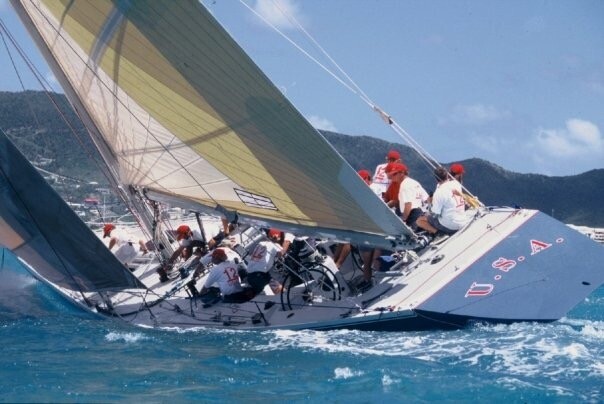
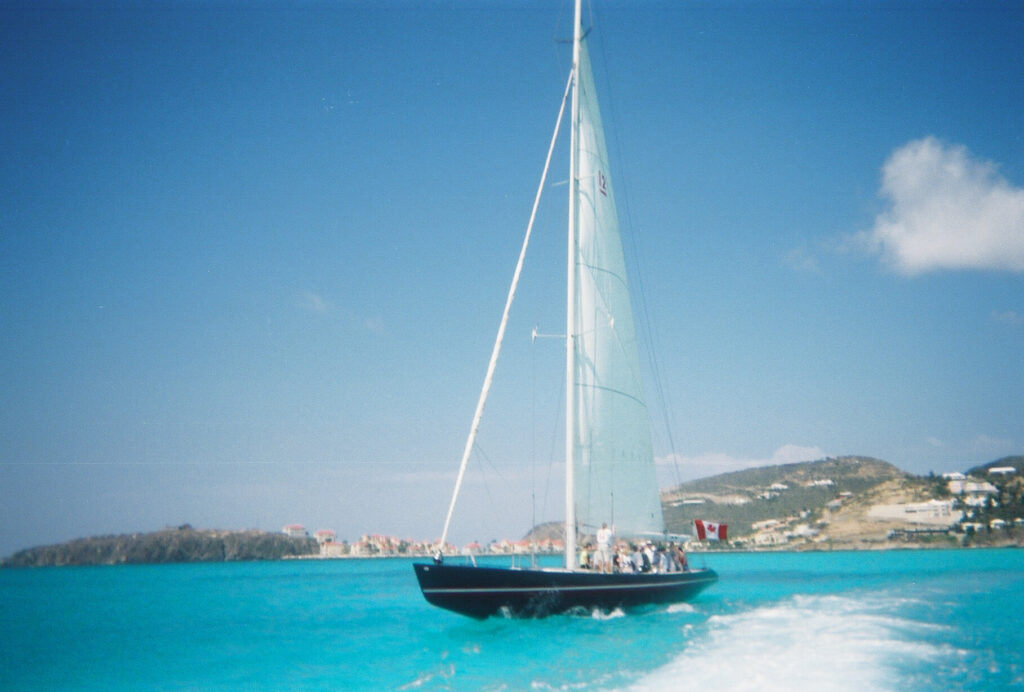
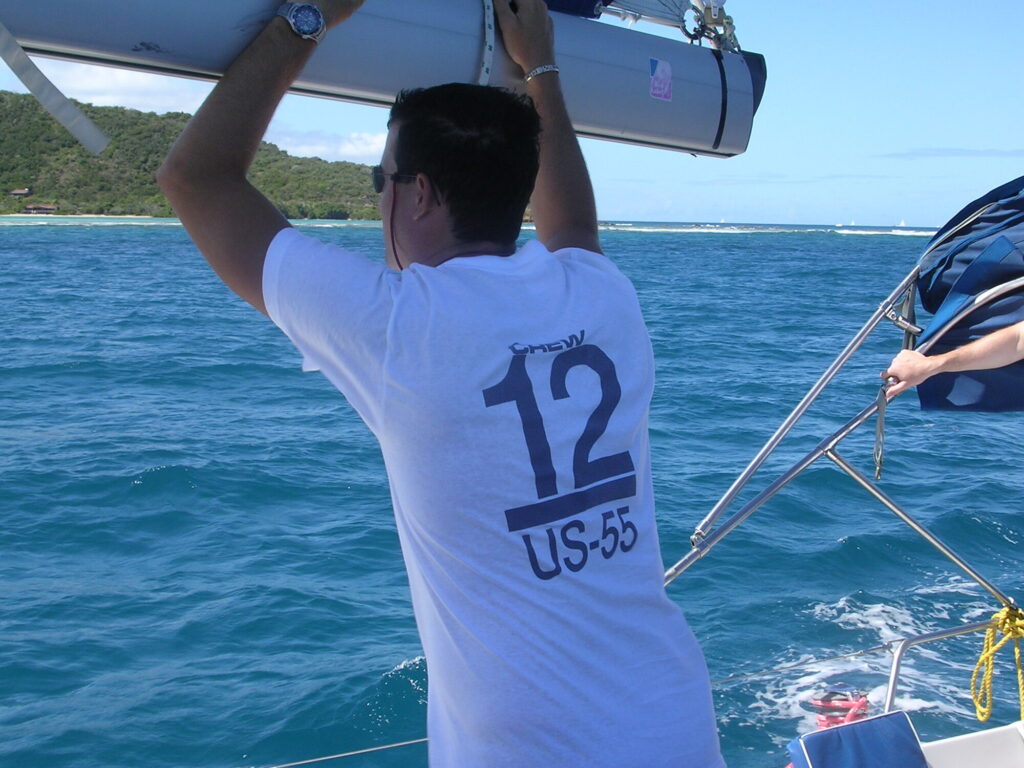
The job was sailing old America’s Cup boats. 12M Class yachts. Nearly seventy feet long, built to race in another era, and unlike anything I’d sailed before.
Up until then, the biggest boats I’d raced were Melges 24s and J/24s, and I knew I had a lot to learn.
That was exactly where I wanted to be.
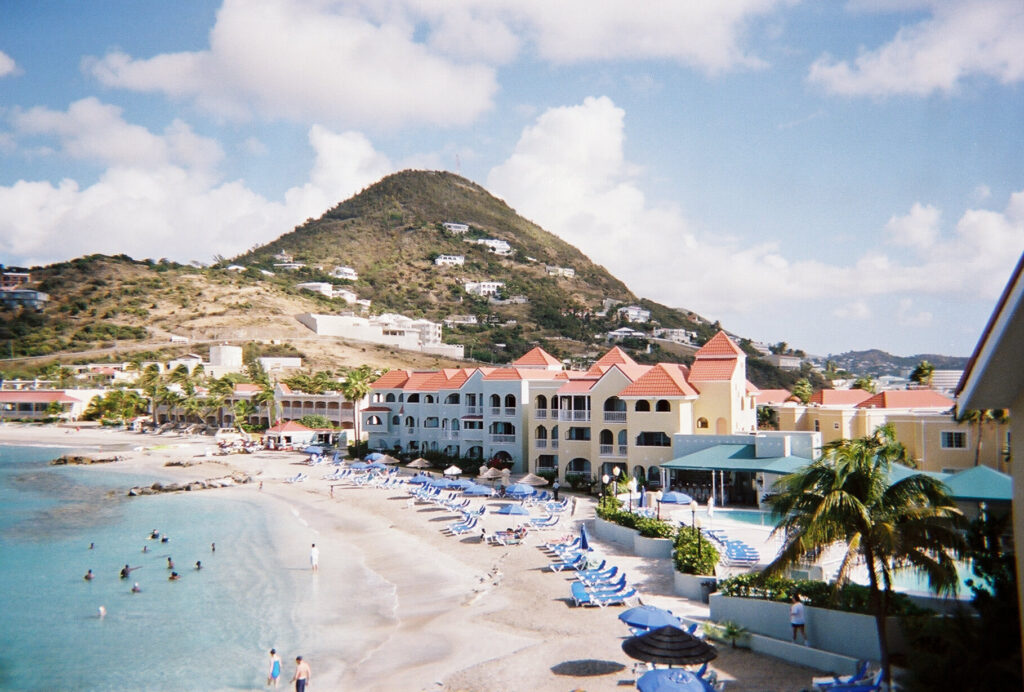
My time at the hotel eventually ran out, but I managed to find another place that rented rooms by the month.
It wasn’t advertised, and it wasn’t listed anywhere.
It was the kind of place you only found by living there…the kind of arrangement locals knew about, but visitors never did.
Eventually another crew member, who’d already spent a season in the Caribbean, helped me find an apartment.
Apartment is probably giving it too much credit: four guys, one bedroom, two sets of bunk beds, one bathroom, windows that had never known glass.
The only blanket I owned doubled as my towel, and I slept under a mosquito net because there wasn’t much choice.
I don’t remember thinking any of it was hard. It was just life.
Most of what I’d packed from New York never left my bag: nice shirts, shoes I’d imagined wearing out somewhere.
Turns out, I hadn’t moved to the Caribbean for any of that.
Life got simple in a hurry.
Wake up.
Go sailing.
Fix whatever broke.
Find some food.
Drink beer.
Do it again tomorrow.
We bought a beat-up 1986 Mitsubishi Lancer because none of us could afford a car by ourselves.
Together, we could, and that seemed to solve most problems back then.
We shared everything: food, money, stories, hangovers.
Somehow there was always enough.
Even after we bought the car, I usually walked home: after work, after dinner, after one more beer than I probably needed.
Most nights, I didn’t bother putting my shoes back on.
There was something about walking barefoot through a warm Caribbean downpour that just felt right.
The rain washed the salt from another day on the water, and by the time I got home, I was clean(ish) again.
It was practical, but it never felt ordinary.
Before long, it just became part of life.
Looking back, I think that’s what I miss the most (and found again in Mallorca).
Not being twenty three, or living in the Caribbean, but being surrounded by people who had all made the same decision.
Nobody was chasing a promotion. Nobody cared what was next.
We’d all ended up on a small island for our own reasons.
That was enough.
Every morning, the alarm went off before sunrise.
Some mornings it hurt from the night before. Other mornings we’d paddle out and catch a few waves before work.
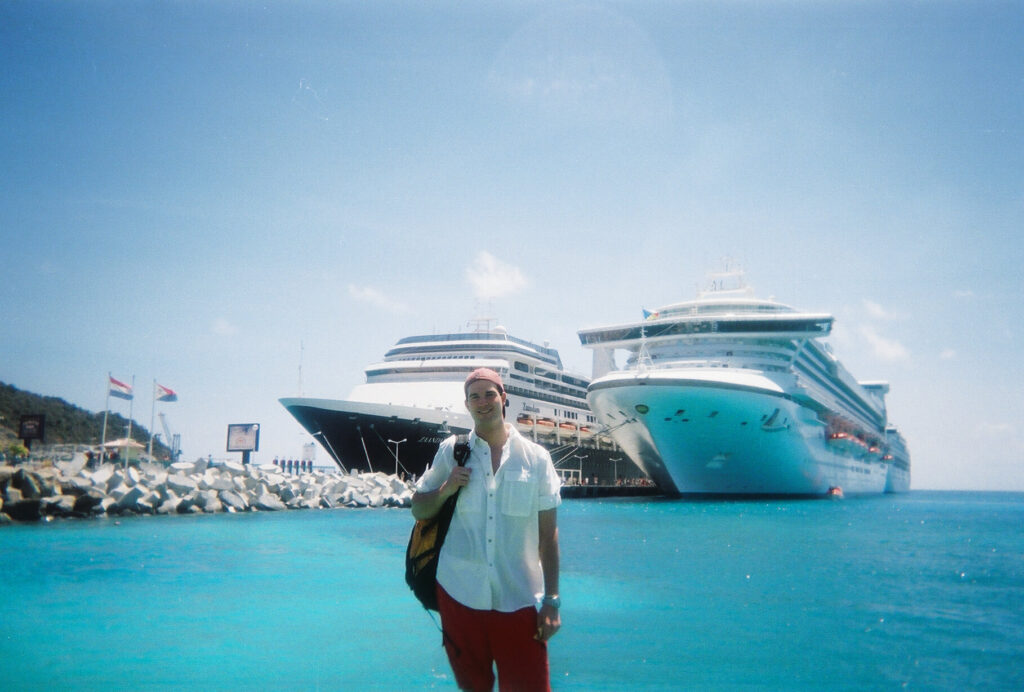
By the time the first cruise ship tied up to the dock, we’d already prepped the boats.
It never occurred to us that it was unusual.
Looking back, I don’t think I’ve ever stopped chasing the life that began there.
The Days Off
We worked thirteen days on and one day off.
Sometimes, if we got lucky, two.
Most of the crew caught up on sleep. Some headed straight for the beach.
I usually caught the first flight I could.
Before moving to Sint Maarten, I thought of the Caribbean as one place. It took about a week to realize how wrong I was.
The islands sat close together on a map, but they couldn’t have felt farther apart. One morning I’d wander through a French market that smelled of butter, espresso, and fresh bread. The next I’d be sitting barefoot at a little beach bar with a cold Carib, listening to reggae while nobody seemed remotely concerned about what time it was. A day later I’d be ordering lunch in Spanish.
Every island had its own rhythm.
More importantly, every island had its own idea of what mattered.
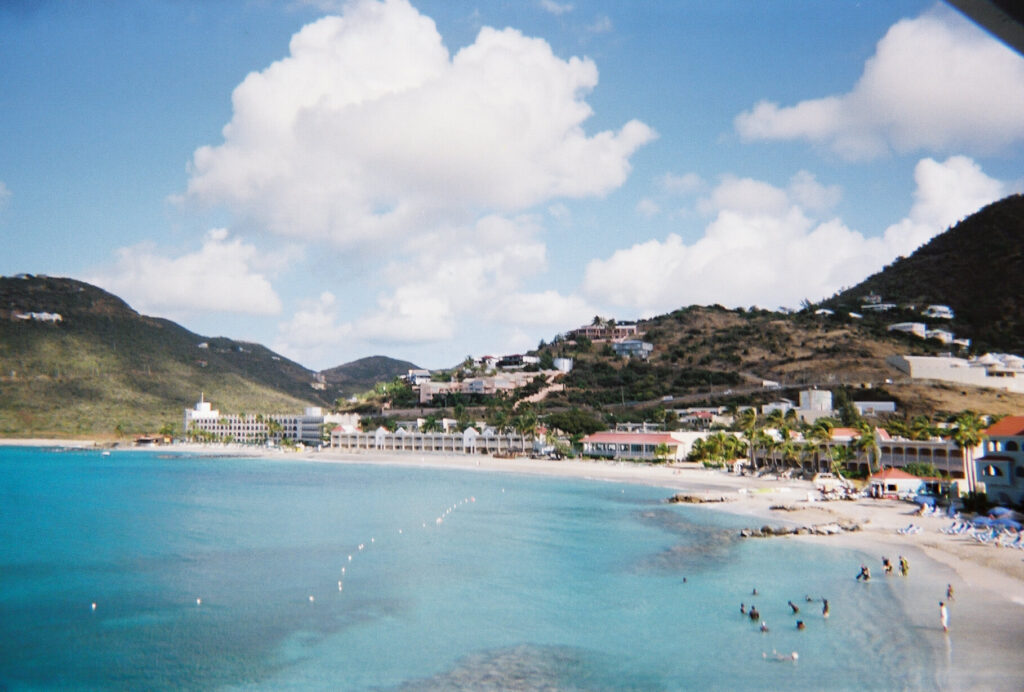
Anguilla was the first place that made me realize an island didn’t need much to be memorable. There wasn’t an itinerary. There wasn’t much to do, honestly. You’d order a whole fish, another beer, and before long it was late afternoon. Nobody seemed interested in filling the day. They were perfectly content to let it unfold.
After a while, so was I.
St. Kitts felt older. You could sense it in the plantation houses, weathered churches, and roads that seemed to follow paths people had been walking for centuries. Then you’d take the ferry to Nevis, and everything slowed down another notch. Not because anyone was trying to create a certain atmosphere…it was simply how life worked there. I’d find myself lingering over lunch without ever deciding to, and nobody around me seemed to think that was unusual.
What surprised me wasn’t how different the islands looked.
It was how differently people lived.
The farther I wandered, the less anyone seemed interested in rushing toward whatever came next. Nobody seemed to be waiting for life to begin after the next promotion, the next purchase, or the next milestone.
They were already living it.
Farther south, Aruba and Curaçao challenged the version of the Caribbean I’d carried with me from childhood. Aruba was dry, windy, and almost desert-like, while Curaçao somehow felt unmistakably Dutch without ever feeling European. Puerto Rico was something else entirely. The streets were louder, the cities bigger, and my Spanish improved a little every time I visited. Not because I studied it, but because I had another excuse to use it.
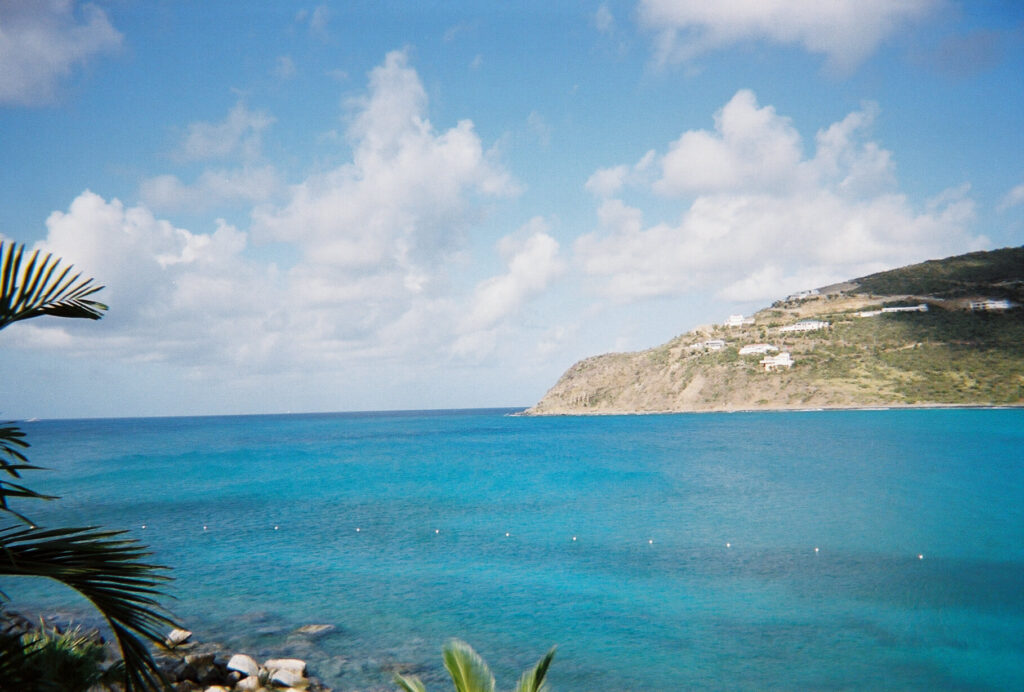
Then there was St. Barts.
At the time, I couldn’t have explained why it felt different.
Looking back, I think it was my first glimpse of Europe.
Coffee wasn’t something you grabbed on the way somewhere; it was the reason you were there.
Years later, when I found myself settling into life in Mallorca, I realized I’d already fallen in love with that rhythm on a little French island in the Caribbean.
My favorite island, though, was Saint Eustatius.
Everyone just called it Statia.
Getting there was half the adventure. You walked into a tiny airport, paid cash for a seat on a little prop plane, and hoped your bag wasn’t too heavy. The pilot was a friend I’d probably shared beers with the night before.
The next morning he was flying me to another island, and nobody thought twice about it.
Once I landed, I’d rent a car from a woman who wasn’t really in the rental business.
It was simply her car.
She’d hand me the keys, remind me to have it back before dark because she needed it to get home, and that was the entire agreement.
No paperwork.
No deposit.
No pricey insurance upsell.
Just trust.
I’d spend the day following whichever road looked interesting. Sometimes it led to an old fort overlooking the sea. Sometimes a quiet harbor. Sometimes nowhere in particular.
Those were usually the best days.
I always carried my journal.
I’d order a coffee.
Sometimes a beer.
More often than I’d care to admit, both.
I’d write for a while, watch people come and go, strike up a conversation if someone felt like talking. But mostly, I just wanted silence and my own thoughts.
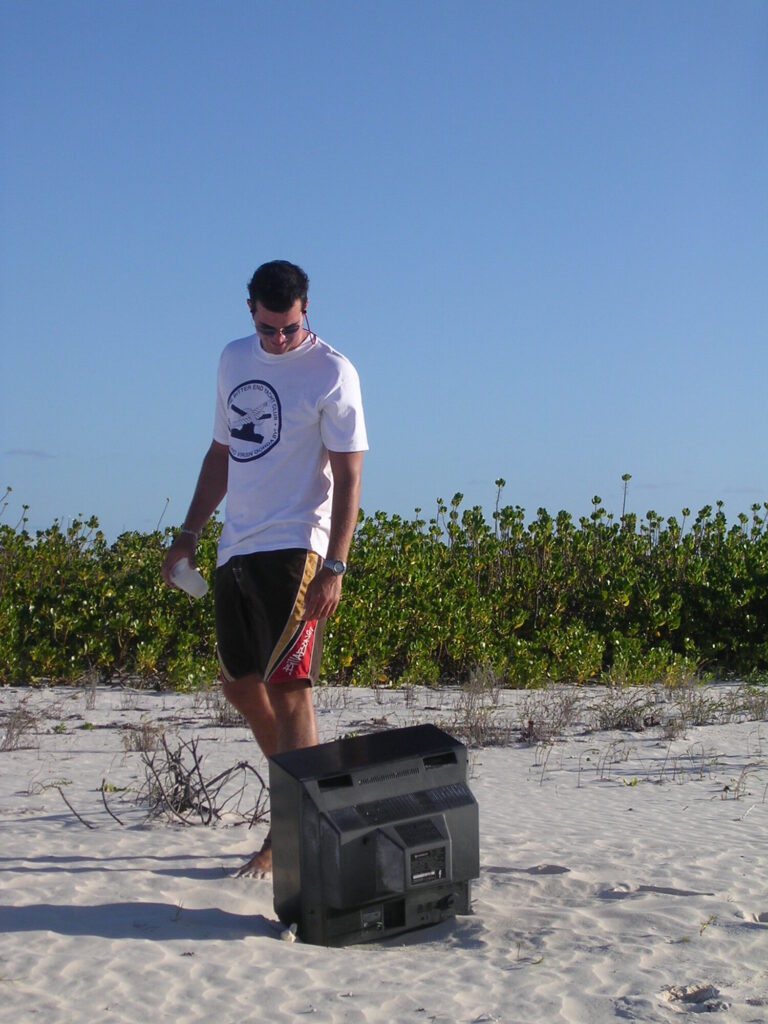
Travel was quieter then.
If I wanted to tell someone about my day, I first had to remember it. There were no photos waiting to be uploaded, no group texts asking where I was, and no social media reminding everyone else where they weren’t.
Most of the people I cared about had no idea which island I was exploring that afternoon.
Somehow, that made those moments feel even more like my own.
The waiter who brought another coffee.
The bartender who remembered my name.
The couple at the next table.
For a few hours, they were my entire world.
If I wanted to remember those days months later, I had to remember them well enough to tell the story, which is probably why I still remember so much of it.
I wasn’t trying to check places off a list, or collecting islands.
I was learning how many different ways there were to live a good life.
By late afternoon, I’d hand back the keys, climb into that little airplane, and be sailing again the next morning.
At the time, it just felt like another Tuesday.
The Sea Time
The days off were unforgettable, but the thirteen days in between were where I learned my trade.
When I first arrived, I knew how to sail, or at least I thought I did.
College sailing had taught me tactics, boat handling, and racing around buoys.
The Manhattan Yacht Club taught me small keelboat racing on J/24s.
The Caribbean taught me everything else.
We sailed almost every day: every charter, every race.
The repetitions added up quickly.
You stopped thinking about the mechanics and started paying attention to the details: how the boat sounded, how the helm felt, whether the winch was just a little off.
Before long, I could climb a mast without thinking twice.
Trace electrical problems.
Splice line.
Repair sails.
Rebuild a winch.
One of our favorite games was dumping every part of a three speed winch into a box, giving it a shake, and seeing how fast we could put it back together.
Fifteen minutes was respectable, ten minutes was seasoned veteran. Eventually it became muscle memory.
Heavy weather had its own education.
The first time I saw a waterspout, I couldn’t stop staring at it.
The first time a squall rolled across the water, I learned how quickly the Caribbean could change its mind.
I was trimming the jib when the wind jumped from twenty knots to forty almost instantly.
We had guests on board, and there wasn’t time to reef, only time to react.
The boat laid over so far the trimmer’s pit was in the water, and for a moment, I thought I was going with it.
The guests were scared. So was I.
That was the last time I failed to read the weather.
The wind arrived first, then the rain.
It hit so hard it felt like needles across your face.
Even though it was 35°C (95°F), you’d be shivering a few minutes later.
The knockdown gusts that felt terrifying the first month eventually became something we solved without talking.
The best boats, I learned, were the ones where the crew eventually shared one mind.
After enough miles together, you could almost work by instinct; sometimes all it took was a glance.
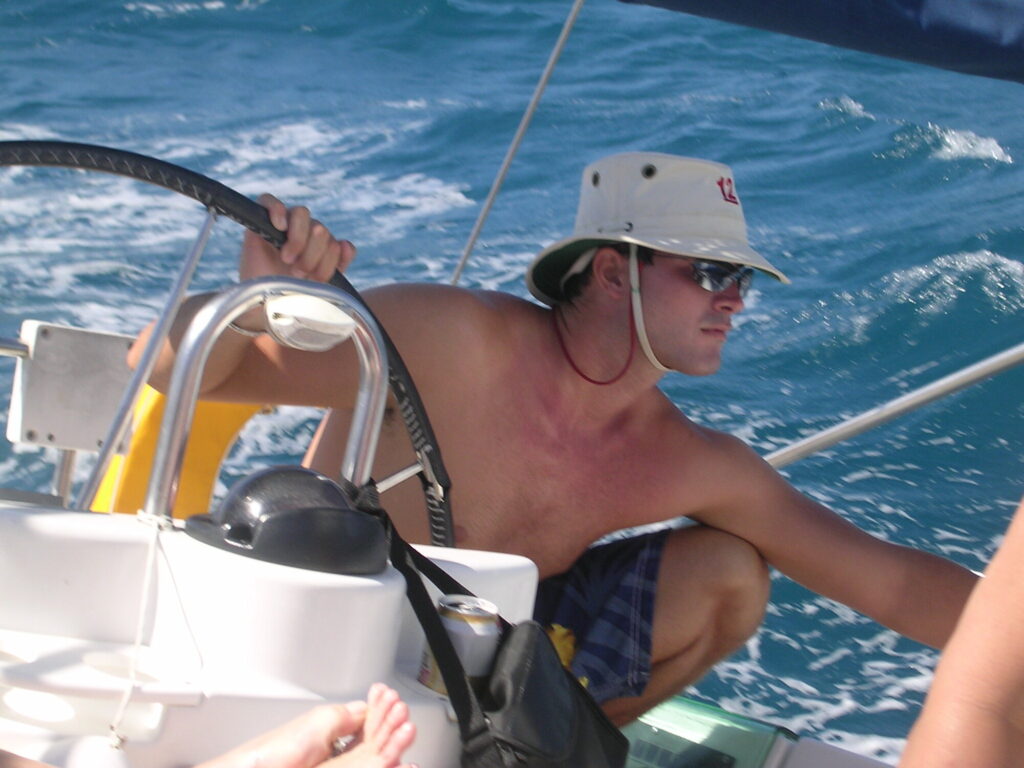
The captains I looked up to had only been doing it a couple of years longer than I had.
That doesn’t sound like much, but when you’re sailing every day, it was an eternity.
They weren’t heroes.
They were craftsmen.
They knew every sound the boat made, taught me how to race, taught me sportsmanship, and the good ones knew every member of the crew.
They also taught us that sailing was a no-compromise business.
Our boats didn’t have engines, so at the end of the day, we’d sail onto a mooring ball.
Everything had to happen at exactly the right moment.
As the boat coasted in, the sails came down.
Someone had one chance to grab the mooring line.
If you caught it, the day was over.
If you missed it, there wasn’t another lap.
The boat kept drifting….into whatever was in our way, a 70-foot wrecking ball in the harbor.
The captain never needed to yell.
He’d just smile and say, “That’s a case of beer.”
That was the rule: miss the mooring, buy the crew a case.
Every couple of weeks, after payday, we’d carry those cases down to the dock.
The beer wasn’t really the point.
The stories were.
We’d relive every missed pickup, every embarrassing mistake, every close call. By the end of the night, somebody else’s mistake had become everybody’s lesson: practice, responsibility, a little financial pain, a lot of laughter.
I’ve stolen that lesson many times since.
The charter guests added an education of their own.
Most were wonderful, some were unforgettable for entirely different reasons.
One afternoon a guest got seasick and threw up directly onto my winch.
Unfortunately, the jib sheet was wrapped around it under load.
A few minutes later we tacked. I didn’t have much choice. I blew the wraps, the jib sheet screamed around the winch under load, and the rest of us wore the consequences.
It wasn’t one of my finer moments.
You learned pretty quickly that the job wasn’t just sailing.
It was solving problems nobody saw coming.
The crew became family: we lived together, worked together, celebrated together, argued sometimes, then got up the next morning and did it all again.
Those friendships were forged somewhere between long days, broken boats, saltwater, hangovers, and more laughter than I can remember.
The responsibility came faster than adulthood usually does.
One day I was the new guy asking questions.
Before long, I was the one expected to have the answers.
At twenty-four, they gave me the helm.
That felt less like a promotion and more like someone saying, “We trust you now.”
It was a responsibility I didn’t take lightly.
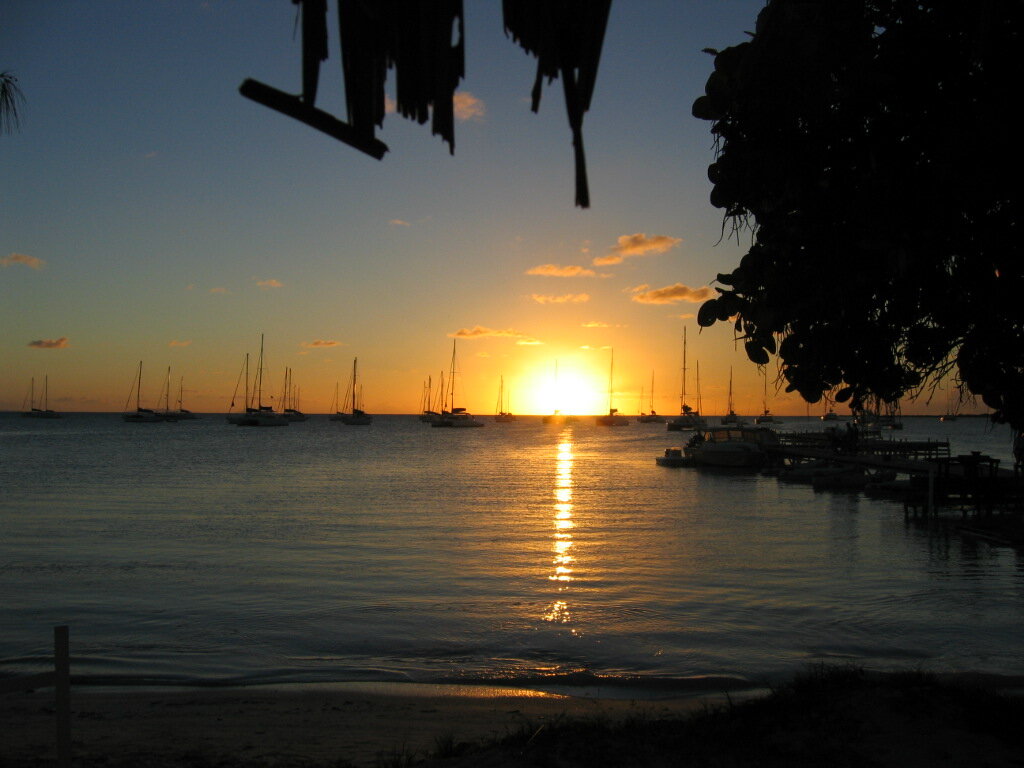
Somewhere along the way, the routines became ordinary: flying fish across the bow, pods of dolphins appearing out of nowhere and swimming alongside us, sunsets that were remembered instead of photographed.
Without realizing exactly when it happened, the ocean stopped feeling like the place I worked.
It simply became home.
The Cost
From the outside, it probably looked like I’d figured life out.
I spent my days sailing turquoise water.
My office was the ocean, and office attire was usually a pair of board shorts.
Every couple of weeks there was another island, another crew, another story.
Most people imagined a permanent vacation.
The reality was more complicated.
Long before smartphones and social media, staying connected took effort: phone cards, internet cafés, emails that took forever to download, letters that sometimes found you weeks later, and sometimes didn’t.
If you missed a call home, you waited, sometimes another week, sometimes longer.
Life kept moving whether you were there or not.
Friends got married and families grew. People bought houses, started careers, had children.
I heard about most of it after the fact, sometimes much later.
Birthdays became phone calls.
Christmas was wherever the boat happened to be, with whichever crew had become your family that season.
Not worse. Just different.
Weddings usually came with an apology.
“I wish I could be there.”
Most of the time, I couldn’t.
Friendships faded, not because anyone was angry or did anything wrong, but because we were simply living different lives.
The people I left behind were building roots.
I was learning how to live without them.
Relationships were even harder.
Distance has a way of exposing things, sometimes strengthening them, but most of the time it didn’t.
Goodbyes became familiar. So did starting over.
The strange part was that I rarely felt lonely while I was with the crew.
The loneliness arrived later.
We lived together, worked together, celebrated together, and then someone would sign onto another boat, catch a flight home, or disappear to another island. One day they were part of your everyday life. The next, they were gone.
After a while, you stopped asking whether you’d ever see someone again. You were just grateful you had.
There were moments, though, when the solitude caught up with you.
One birthday, I realized nobody around me knew it was my birthday. I hadn’t told them.
There wasn’t any social media reminding everyone, no phone buzzing with messages from home, no family dinner waiting that night.
It was just another day.
I went to work. We sailed. I probably had a beer after work.
And somewhere along the way, I realized this was part of the bargain.
When you choose a life built around movement, there are moments when the freedom feels intoxicating, and moments when it feels incredibly quiet.
You learn to carry both.
The journals became more important than the photographs.
There weren’t many photographs, since disposable cameras were usually all we had.
They weren’t waterproof. Neither were we.
Digital cameras weren’t really part of a young sailor’s budget anyway.
Most moments lived only in memory, or on the pages of a notebook written at the end of another long day.
Looking back now, I don’t think I was chasing islands.
I was chasing a way of life.
One that demanded far more commitment than most people realized.
It looked carefree from the outside.
It wasn’t.
The people drawn to it weren’t running away from responsibility.
If anything, they were choosing a different kind of responsibility.
A life that required resilience, adaptability, and a willingness to start over more times than most people ever would.
A life for people who never quite fit the idea that success meant a predictable routine, a nine-to-five job, and the same commute every morning.
People who felt more at home arriving somewhere unfamiliar than staying somewhere comfortable.
It was an extraordinary way to live.
It also came with a price.
For a long time, I thought that was simply how life worked.
You couldn’t have one without giving up the other.
I don’t know if that’s true anymore.
But I know it was true then.
The Homecoming
Before I left, I had one request.
I asked if we could take down the American flag that flew from the stern of US-55, Stars & Stripes.
I passed it around the crew and asked everyone to sign it.
I don’t remember exactly why. I just thought it would be a cool keepsake.
More than twenty years later, crews on those same boats still sign the flag when someone moves on.
Mine is safely guarded at home today, one of my most treasured possessions.
Not because it’s a flag.
Because every signature belongs to a chapter of my life.
The next morning, I boarded a flight back to New York, though I don’t remember much about it.
I do remember walking barefoot into the airplane’s bathroom. The flight attendant was not amused.
It didn’t even occur to me that it was unusual.
Maybe that says everything.
The Caribbean had quietly changed what normal felt like.
After years of sandy feet, saltwater, and living outdoors, shoes suddenly felt optional.
Schedules didn’t. Neither did commutes, or the pace.
A few days later I got off the 7 train at Vernon-Jackson, walked into PJ Leahy’s like I had so many times before, and took a seat at the bar.
The room smelled exactly the way I remembered: stale beer, fried food, New York.
Nothing had changed.
Except me.
One life wasn’t better than the other.
I just knew which one I wanted.
People asked me how the Caribbean was.
It was an impossible question.
They asked it the same way they’d ask about a weekend in Montauk or a family vacation in Mexico.
How do you explain years that changed the way you think?
How do you explain friendships forged in squalls, driving your piece-of-shit car down cobblestone roads, or islands that felt more like home than the place where you grew up?
You don’t.
You just smile and tell a story.
I went back to work at the Manhattan Yacht Club for a season.
The stories followed me there.
I’d talk about chartering classic boats through the islands, racing every weekend, and the life we’d built around the water.
Before long, those conversations turned into ideas.
The club eventually acquired its own fleet of 12 Metres and began building experiences that felt a little more like the ones I’d left behind.
That’s one of the quiet gifts of travel.
The places change you.
The stories change the people who never went.
I gave New York another chance.
I really did.
I took a job at Sotheby’s, bought shoes, and learned the rhythm again: morning alarms, subways, meetings, deadlines.
It was a good job with good people.
Working at Sotheby’s meant spending my days with some of the world’s most successful people: business leaders, entertainers, collectors, and financiers.
I expected to be fascinated by their lives.
What surprised me was how often they were fascinated by mine.
I’d tell them stories about sailing between islands, sleeping aboard boats, or crossing oceans under sail. More than a few admitted they’d always wondered what it would be like to walk away from the life they’d built and do something completely different.
Those conversations made me realize success isn’t nearly as universal as we’re taught to believe.
It just wasn’t my life anymore.
One afternoon, after a little over a year, I walked out of Sotheby’s for the last time.
I sold almost everything I owned.
Packed the rest.
And I flew west.
Friends I’d sailed with had been telling me about San Diego for a while.
They said it was the closest thing in the US to the life I’d found in the Caribbean.
I believed them.
Walking into the Manhattan Yacht Club for the first time changed the course of my life.
Buying a one-way ticket to Sint Maarten confirmed it.
Flying to California became the next best decision I ever made.
Looking back, I suppose that’s how I ended up in Mallorca.
I wasn’t chasing the Mediterranean.
I was chasing the feeling I’d first found in the Caribbean.
The Crew
When I bought that one-way ticket, I thought I was moving to the Caribbean.
I had no idea I was beginning relationships that would shape the rest of my life.
Tomorrow night, more than twenty years later, I’ll have dinner here in Palma, Mallorca with a friend from those Caribbean days.
Two years ago, we found ourselves together on another dock, this time at the America’s Cup in Barcelona.
Different sea.
Different chapter.
Somehow, the same crew.
More than twenty years after walking through the clubhouse at Manhattan Yacht Club looking for a summer sailing job, I returned to stand at the helm of the club’s flagship as her captain.
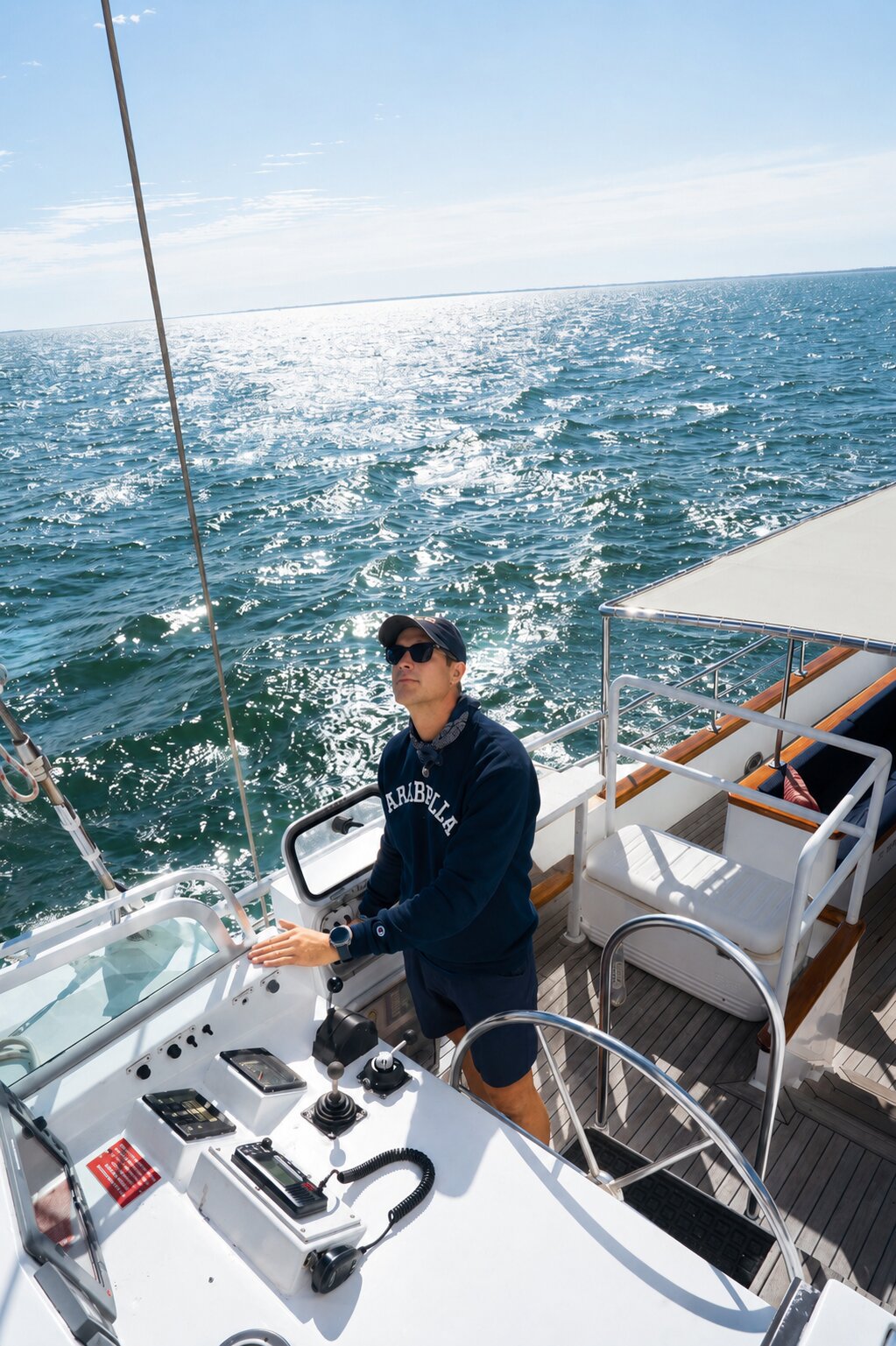
None of that was part of the plan.
It happened because one conversation led to another. One introduction became a friendship. One friendship opened the door to another opportunity. Over time, those connections became the threads that quietly stitched my life together.
People talk about the good old days as though they’re something you leave behind.
I don’t believe that.
Life doesn’t move in straight lines.
It has a funny way of bringing the right people back into the story when you least expect it.
Looking back, the destination mattered far less than the people I met when I got there.
The places gave me memories.
The people gave me roots.
I’ve been fortunate to experience many of them by sailboat and by land, and I’ve collected those experiences into a growing series of destination guides. If you’re wondering where to go next, or where to stay once you get there, I hope they’ll help you find an island that feels like your kind of place.
Explore the Caribbean Guides →
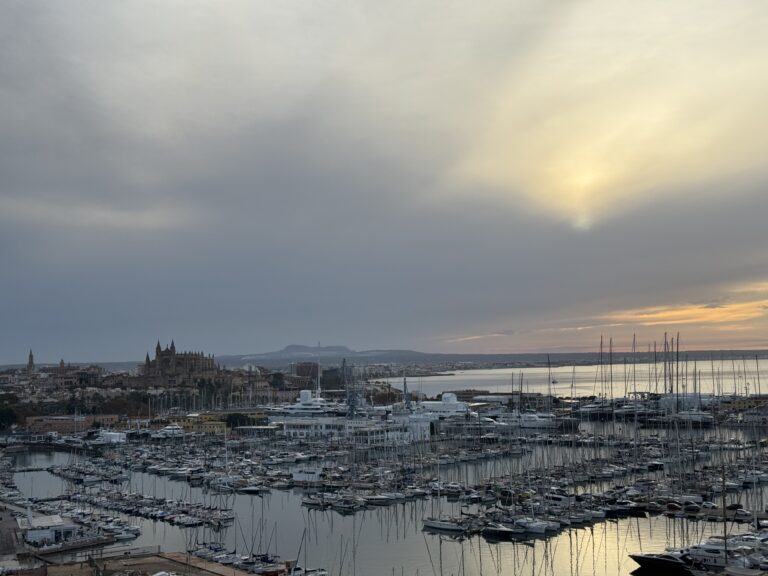
Written from Palma, Mallorca.
39° 33.35′ N, 2° 37.57′ E