Europe Guides
Where to Stay in Corsica
A 2026 Local Guide · Part of the Where to Stay Series
Sailing into Corsica is something every Mediterranean sailor should experience at least once. For me, it was one of those passages I’d been looking forward to for years.
After spending time in Sardinia, we crossed the Strait of Bonifacio, one of the most famous stretches of water in the Mediterranean. It’s a short crossing on the chart, but it feels like you’re arriving in a completely different world.
The language changes, the food changes, and the architecture shifts from unmistakably Italian to unmistakably French. Even the pace feels different.
Corsica is rugged in a way that’s becoming harder to find around the Mediterranean. Mountains rise straight out of the sea, quiet fishing harbors still outnumber cruise ports, and some of the island’s most spectacular coastline can only be reached by boat.
It’s not the easiest island to explore.
That’s exactly why I think you should.
If you’re looking for polished resorts and perfectly planned tourism, there are easier destinations. But if you’re looking for one of Europe’s most authentic islands, a place where French and Italian influences blend into something entirely its own, Corsica belongs near the top of your list.
It still feels like old-world Europe. And that’s becoming increasingly rare.
If You Only Read One Paragraph…
Stay in Bonifacio if you want one of the Mediterranean’s great natural harbors and easy access to Sardinia. Choose Porto-Vecchio for beautiful beaches and some of the island’s best luxury hotels. Head north to Calvi or Saint-Florent if you’re looking for a quieter pace, incredible sailing, and a side of Corsica that many visitors never make it to.
Whatever you do, spend time on the water.
Some of Corsica’s most spectacular places, including Scandola Nature Reserve, Girolata, and the Lavezzi Islands, simply aren’t meant to be reached by car.
That’s part of what makes them so special.
Fast Facts
Corsica in 30 Seconds
Best for
Sailing, hiking, dramatic coastlines, old-world villages, French culture with an Italian influence, and some of the Mediterranean’s most spectacular scenery.
Skip if
You’re looking for an easy beach vacation where everything is five minutes away. Corsica is rugged, spread out, and rewards travelers who like to explore.
Airport
Figari (FSC) is the best gateway for Bonifacio and Porto-Vecchio. Ajaccio (AJA), Bastia (BIA), and Calvi (CLY) all serve different parts of the island with seasonal flights from across Europe.
Rental car?
Absolutely. Unless you’re arriving by boat, I’d consider a rental car essential. Rent a car in Bonifacio →
Ferry access
Regular ferries connect Corsica with mainland France, mainland Italy, and nearby Sardinia. The Bonifacio to Santa Teresa Gallura crossing takes about 50 minutes.
Average hotel cost
Around €100 per night for smaller hotels to €1,000+ per night for Corsica’s luxury resorts and private estates.
Best months
May, June, September, and early October. Warm weather, steady sailing conditions, and noticeably fewer crowds than peak summer.
Getting Around
Rent a Car… But Respect the Wind
If you’re flying into Corsica, rent a car. If you’re arriving by boat, plan around the weather instead.
The roads are beautiful but slow. The mountains force them to twist and climb, and distances almost always take longer than they look on a map.
That’s part of the charm.
You’ll discover tiny villages, roadside cafés, vineyards, and viewpoints that never make it into most guidebooks.
If you’re sailing here, the Strait of Bonifacio deserves your respect.
It’s one of those places every Mediterranean sailor talks about because the forecast and the reality aren’t always the same thing. Wind funnels between Sardinia and Corsica, often accelerating well beyond what you’re seeing outside the strait. A comfortable breeze offshore can become a much more challenging sail once you’re committed.
I’ve learned it’s almost always worth waiting for the right weather window. Corsica isn’t going anywhere.
If you’re arriving by plane, a rental car gives you that same sense of freedom. The island rewards curiosity, and some of my favorite drives were simply between destinations rather than the destinations themselves.
Rent a Car in Bonifacio → · Rent a Car in Porto-Vecchio →
⚓ Sailor’s Tip
If you’re sailing over from Sardinia or mainland Italy, don’t forget to change your courtesy flag before arriving in Corsica.
Corsica is French territory, and flying an Italian courtesy flag into a French marina isn’t likely to earn you the warmest welcome.
It’s a small detail, but it’s one experienced sailors notice immediately. Swap to the French courtesy flag before entering port, and you’ll start your visit on the right foot.
While you’re at it, take a moment to appreciate where you are. You’re crossing one of the Mediterranean’s most famous stretches of water, where French and Italian cultures meet, the wind shapes daily life, and some of the best sailing in Europe begins. If you kiteboard as well, you’ll quickly understand why the Strait of Bonifacio has such a legendary reputation.
Best Areas to Stay
Think of Corsica in stretches of coastline rather than individual towns.
Every region has its own personality, its own pace, and even its own relationship with the sea. One day you’re wandering through a centuries-old citadel overlooking a natural harbor. The next, you’re driving mountain roads where it feels like almost nothing has changed for generations.
That’s one of the things I loved most about Corsica.
It never feels like you’re exploring the same place twice.
Bonifacio

Photo: Bartek Ptaszyński, CC BY-SA 3.0, via Wikimedia Commons
If it’s your first visit, this is where I’d start.
Perched on towering white limestone cliffs above one of the Mediterranean’s great natural harbors, Bonifacio is unlike anywhere else I’ve sailed. Watching boats thread their way through the narrow entrance beneath the old citadel is something you don’t forget.
It’s also the perfect base for exploring the Lavezzi Islands, sailing the Strait of Bonifacio, or hopping over to northern Sardinia.
Best for: First-time visitors, sailors, history, and unforgettable scenery.
Porto-Vecchio & the Southeast Coast

Photo: dronepicr, CC BY 2.0, via Wikimedia Commons
This is Corsica’s beach destination.
Beautiful bays like Palombaggia and Santa Giulia combine clear water with some of the island’s nicest hotels and restaurants. It’s more polished than much of Corsica without losing the relaxed island atmosphere.
Best for: Luxury hotels, beach vacations, couples, and families.
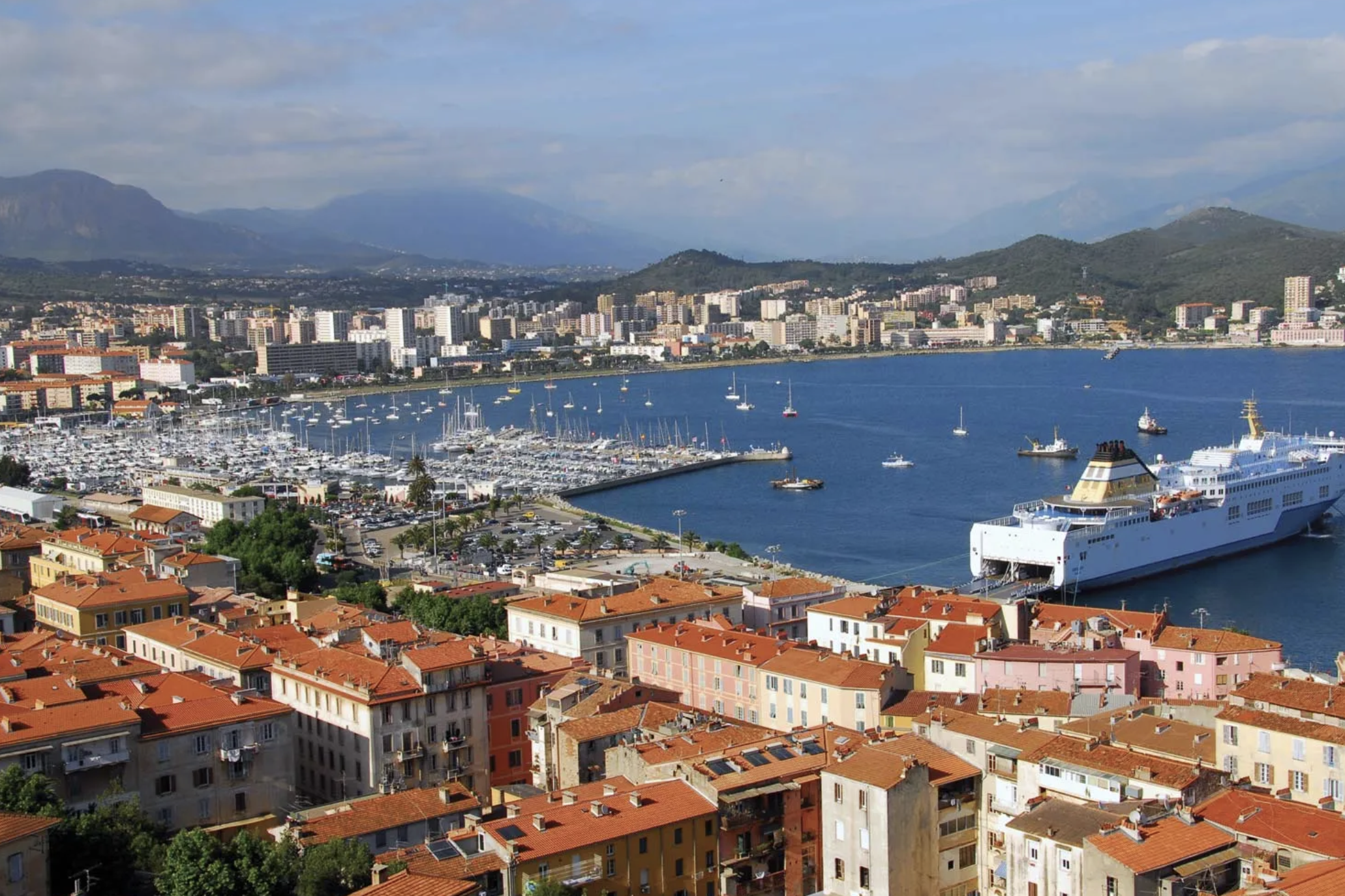
Ajaccio

Photo: Pir6mon, CC BY-SA 3.0, via Wikimedia Commons
Napoleon’s birthplace has a very different feel from Bonifacio.
It’s a real working city with marinas, cafés, markets, and one of the easiest airports on the island. If you’re flying in and want a practical base for exploring western Corsica, Ajaccio makes a lot of sense.
Best for: Convenience, city life, and exploring the west coast.
Golfe de Porto, Scandola & Girolata

Photo: SausauRJ, CC BY-SA 3.0, via Wikimedia Commons
This is one of the most spectacular coastlines I’ve seen anywhere in Europe.
Red granite cliffs, crystal-clear water, tiny fishing villages, and protected nature reserves.
The best part? Some of it simply can’t be reached by road.
Girolata still feels wonderfully isolated because arriving by boat is often the easiest way to get there. Places like this remind me why I love traveling by sea.
Best for: Sailing, hiking, photography, and dramatic scenery.
Calvi & the Balagne Coast

Photo: dronepicr, CC BY 2.0, via Wikimedia Commons
Calvi has a relaxed confidence about it.
A beautiful citadel overlooks a long sandy beach, while the marina fills with cruising boats throughout the summer. The surrounding Balagne region is full of small villages, vineyards, and winding roads that reward taking your time.
It’s also one of the best places on the island if you enjoy sailing or watersports.
Best for: Couples, sailing, and exploring northern Corsica.
Saint-Florent & Cap Corse
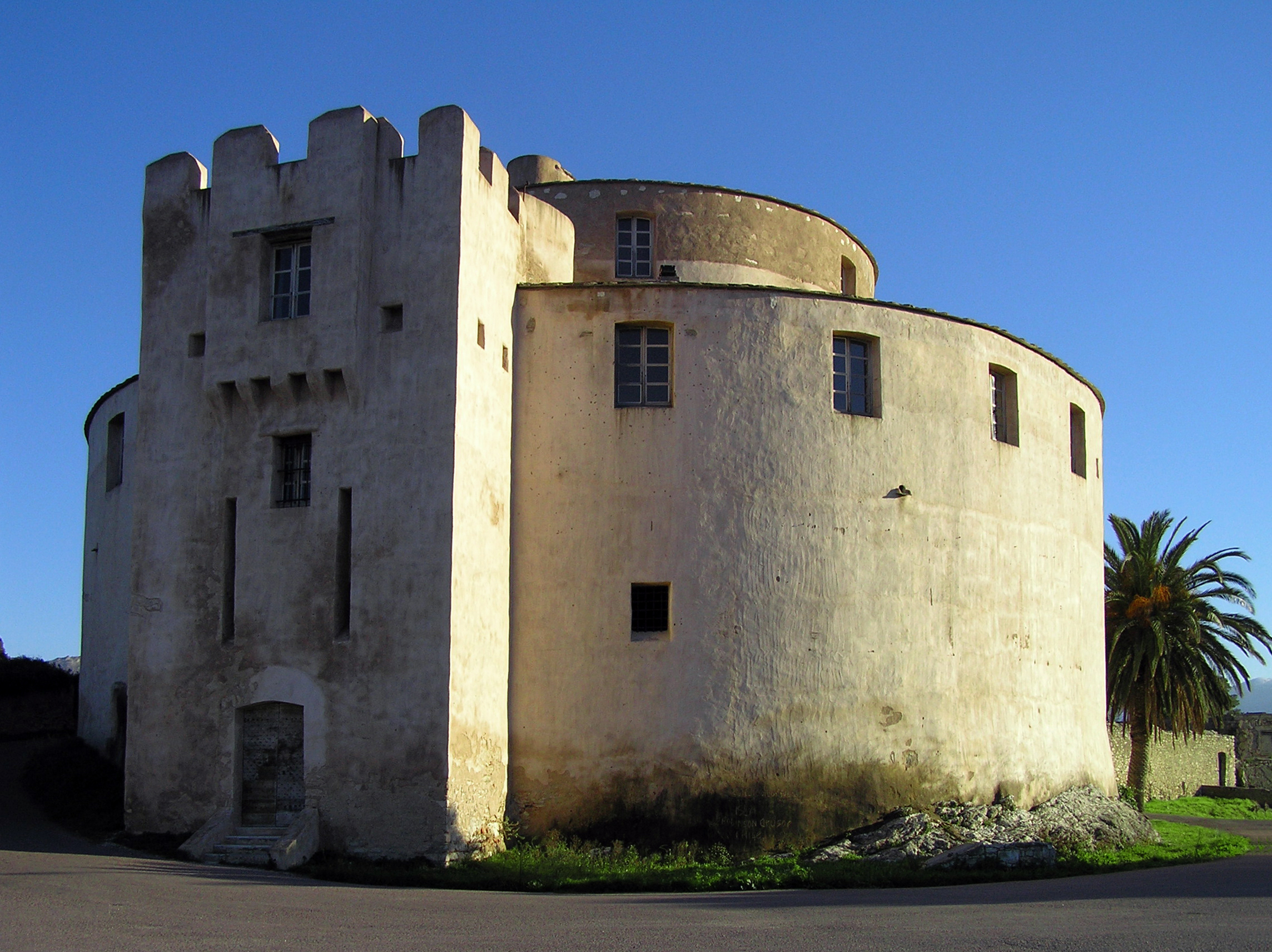
Photo: Pierre Bona, CC BY-SA 3.0, via Wikimedia Commons
Saint-Florent is quieter than Calvi and Porto-Vecchio, but that’s exactly why many people fall in love with it.
Nearby vineyards produce some excellent Corsican wines, while Cap Corse feels wonderfully untouristed compared to much of the Mediterranean.
If you enjoy slowing down, this is a great place to do it.
Best for: Wine lovers, quieter vacations, and discovering a more local side of Corsica.
Lavezzi Islands & Rondinara

Photo: dronepicr, CC BY 2.0, via Wikimedia Commons
These aren’t places I’d stay overnight, but they absolutely deserve a place on your itinerary.
The Lavezzi Islands are protected and home to some of the clearest water I’ve seen anywhere in the Mediterranean. Rondinara’s perfectly curved bay is every bit as beautiful as the photos suggest.
Whether you’re arriving on your own boat or joining a day trip from Bonifacio, don’t miss them.
Best for: Day trips, snorkeling, swimming, and sailing.
Where I’d Stay
A quick note: If it were my first trip, I wouldn’t stay in one place the entire time. Corsica is a surprisingly large island, and every stretch of coastline feels different. I’d split my trip between Bonifacio or Porto-Vecchio in the south and Calvi or Saint-Florent in the north. If you have even more time, add a few nights around Ajaccio to explore the west coast.
Like Sardinia, Corsica rewards moving around.

Photo courtesy Hôtel Kalliste
Ajaccio · Value (€90–150/night)
Hotel Kalliste
I’d stay here because it’s exactly the kind of straightforward hotel I like recommending. Comfortable, well located, and within easy walking distance of Ajaccio’s marina, restaurants, and old town. It makes an excellent base if you’re arriving by ferry or flying into the island.
Stay here if: You want an affordable, central base that’s easy to explore on foot.
Skip it if: You’re looking for a beachfront resort.
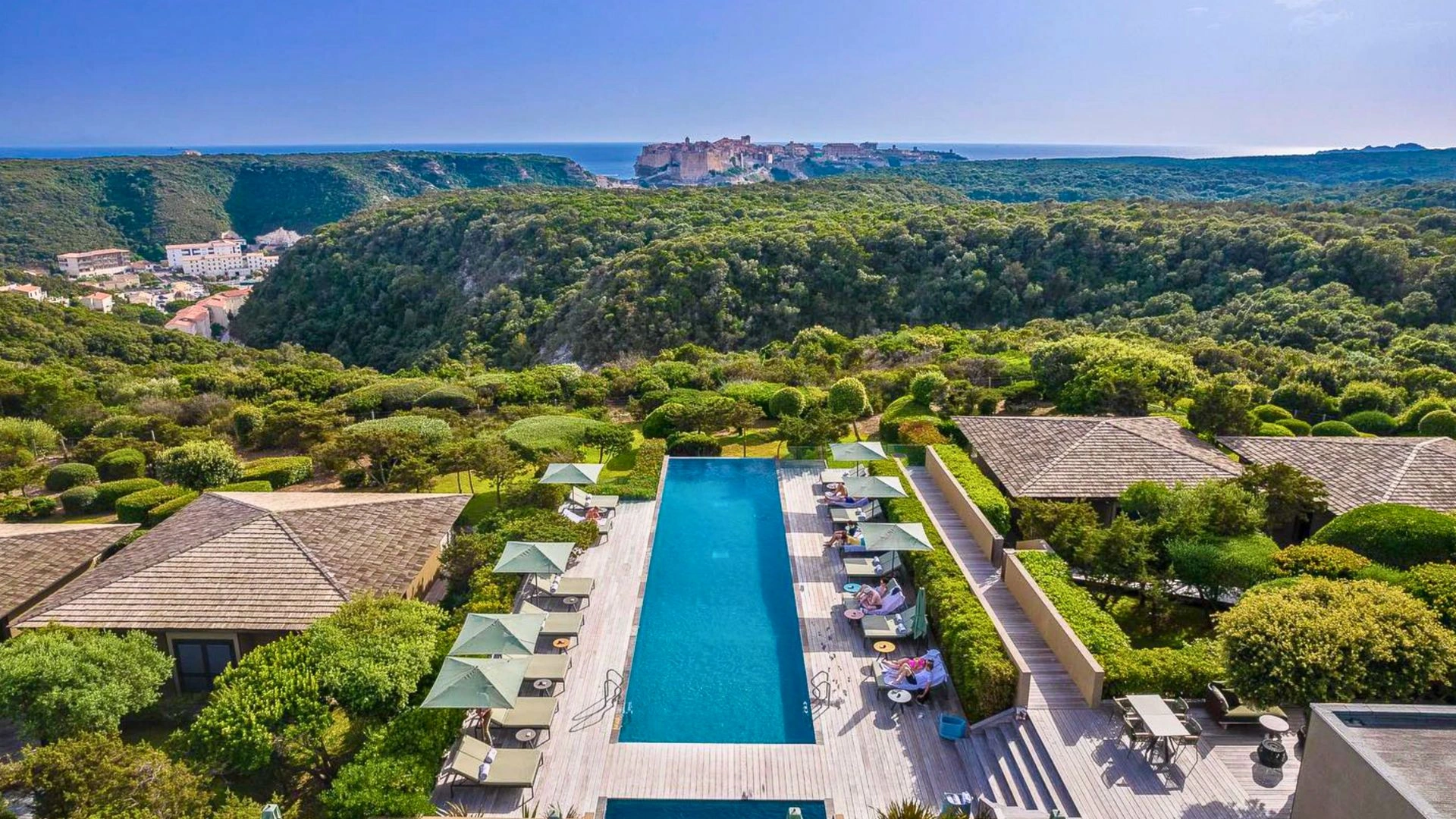
Photo courtesy Hôtel Version Maquis Citadelle
Bonifacio · Upper Mid-Range (€200–350/night)
Hôtel Version Maquis Citadelle
I’d stay here because Bonifacio is one of the highlights of Corsica, and this hotel puts you close enough to enjoy the historic citadel while giving you a peaceful place to retreat at the end of the day. The infinity pool overlooking the landscape doesn’t hurt either.
Stay here if: You’re visiting Bonifacio for the first time and want a modern, comfortable stay close to the action.
Skip it if: You’d rather stay somewhere with a more traditional Corsican feel.

Photo courtesy Hôtel La Villa Calvi
Calvi · Luxury Boutique (€370–600/night)
La Villa Calvi
I’d stay here because the views over Calvi’s citadel and bay are spectacular. It’s elegant without feeling overdone, and it makes a fantastic base for exploring the Balagne coast.
Stay here if: You’re looking for a romantic escape with beautiful views and easy access to northern Corsica.
Skip it if: You want to walk everywhere. You’ll need a short drive into town.

Photo courtesy Grand Hôtel de Cala Rossa
Porto-Vecchio · Luxury (€450–800/night)
Grand Hôtel de Cala Rossa
I’d stay here because it delivers understated luxury right on the water. Rather than trying to impress with flash, it focuses on exceptional service, beautiful surroundings, and a relaxed Mediterranean atmosphere.
Stay here if: You want a classic luxury beach vacation without the crowds of a larger resort.
Skip it if: You want nightlife within walking distance.
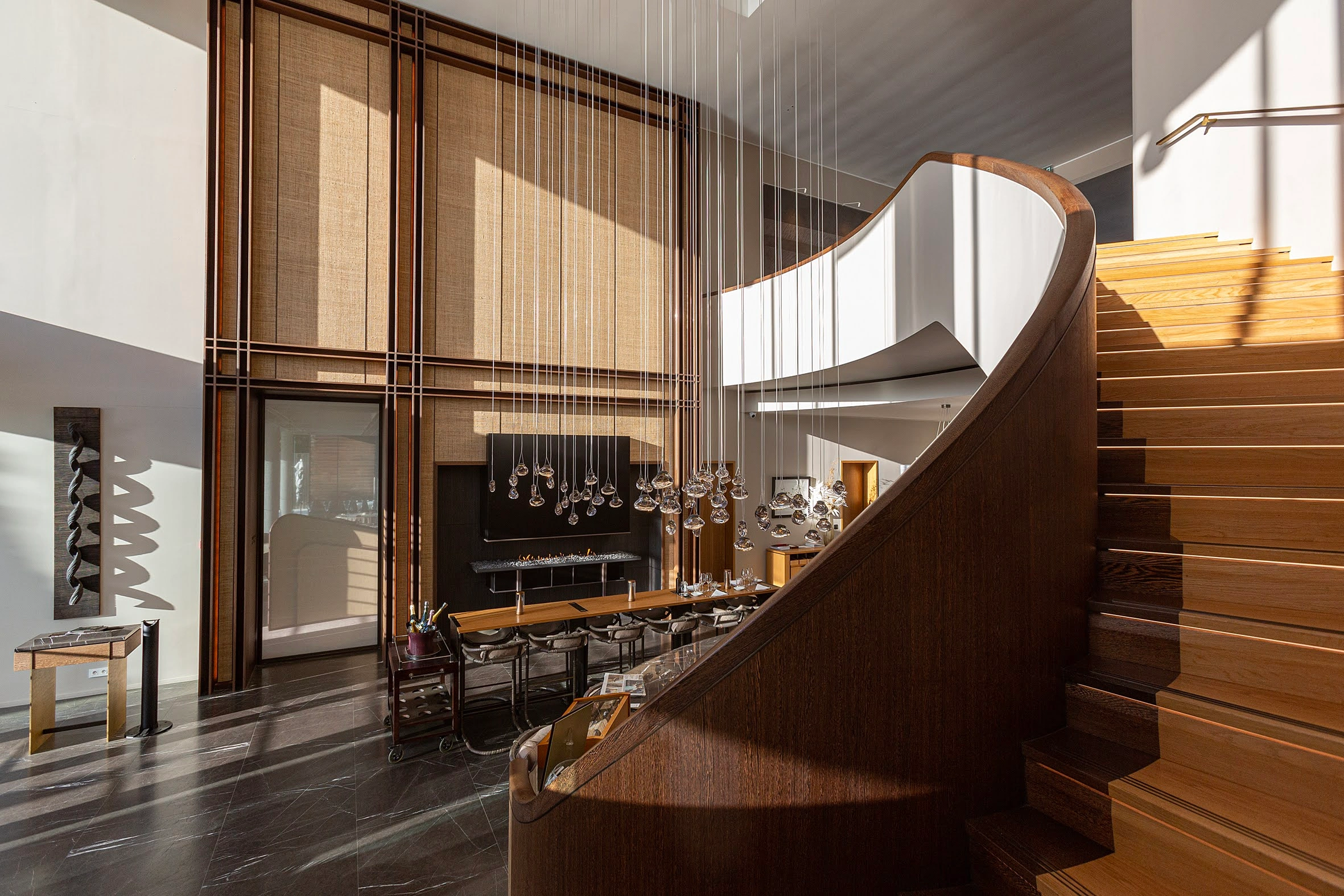
Photo courtesy Hôtel Casadelmar
Porto-Vecchio · Ultra-Luxury (€700–1,500+/night)
Casadelmar
I’d stay here because it’s one of Corsica’s flagship luxury hotels. The modern architecture, waterfront setting, and Michelin-starred dining make it one of the island’s most memorable stays if you’re celebrating something special.
Stay here if: Design, exceptional dining, and five-star luxury are high on your list.
Skip it if: You’re hoping for a traditional stone farmhouse or historic Corsican character.

Photo courtesy Domaine de Murtoli
Near Sartène · Ultra-Luxury (€690+/night)
Domaine de Murtoli
I’d stay here because there really isn’t anywhere else quite like it. Restored shepherds’ houses scattered across a vast private estate create one of the most unique hotel experiences in Europe. It’s remote, peaceful, and feels completely disconnected from the outside world.
Stay here if: You’re looking for total privacy and one of the most distinctive luxury stays in the Mediterranean.
Skip it if: You want to be able to walk into town for dinner or spend your evenings exploring local nightlife.
Coming by Boat
If there’s one place in the western Mediterranean that feels made for sailing, it’s Corsica.
The island rewards arriving from the water.
Towering limestone cliffs, protected anchorages, remote beaches, and natural harbors that sailors have been using for centuries.
One of the things I love most about Corsica is that some of its best places still can’t be reached by road: Girolata, parts of the Scandola Nature Reserve, the Lavezzi Islands.
The boat isn’t simply transportation here. It’s part of the experience.
If you’re crossing from Sardinia, don’t underestimate the Strait of Bonifacio. It’s one of those passages that has earned its reputation. Wind funnels through the gap between Corsica and Sardinia, often blowing much harder than the forecast suggests. A comfortable sail can quickly become a sporty one if you don’t respect the conditions.
My advice is simple: watch the weather, wait for a good window, then enjoy one of the most memorable crossings in the Mediterranean.
Provisioning is easy in Ajaccio, Calvi, Porto-Vecchio, Saint-Florent, and Bonifacio, all of which have excellent marinas. If you’re planning to overnight in Bonifacio during the summer, book your berth well in advance. It’s one of the most sought-after marinas in the western Mediterranean.
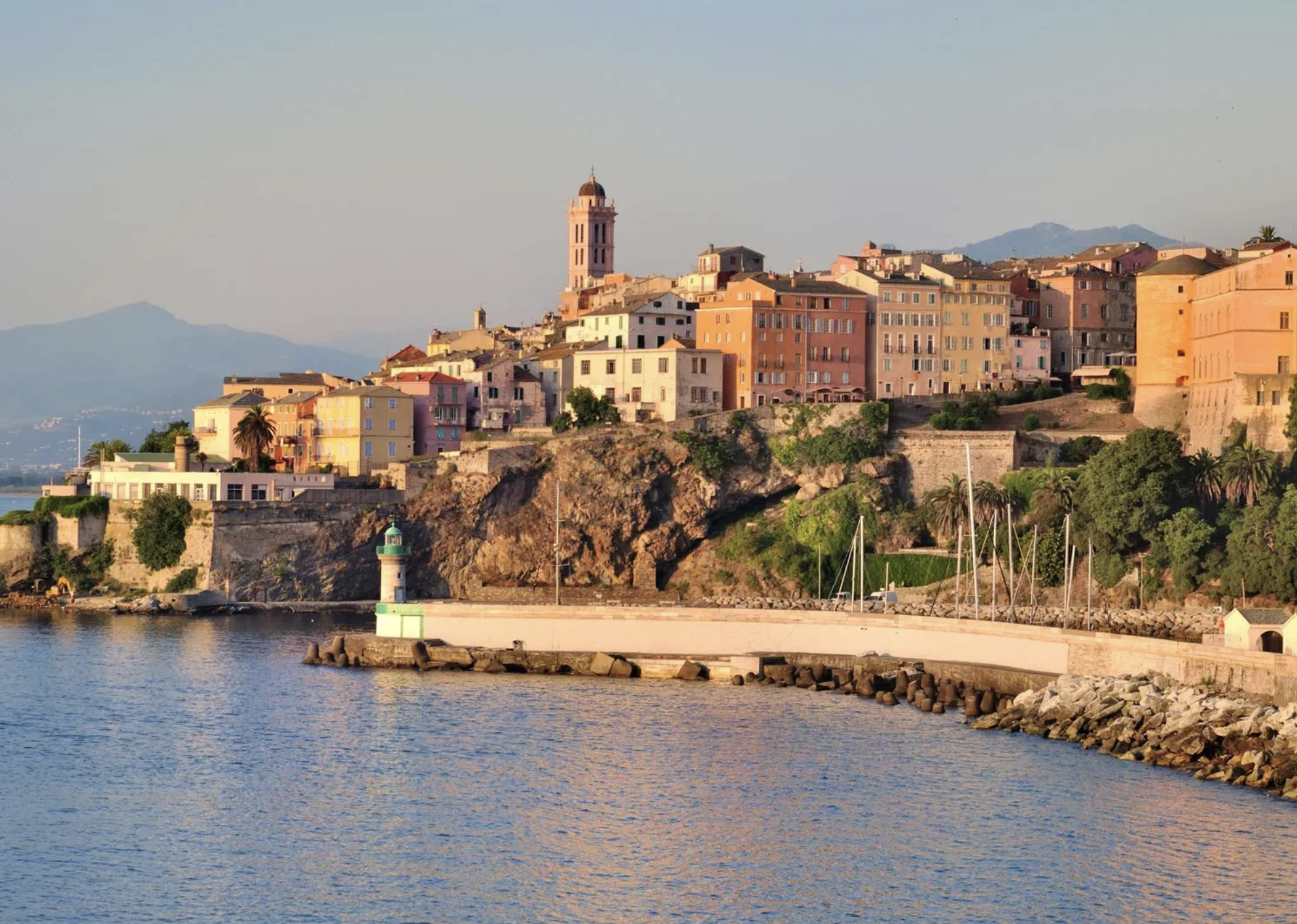
Why Corsica Feels Different
One of the things that surprised me most about Corsica was how distinct it feels from both France and Italy.
Geographically, it’s only a short sail from Sardinia. Culturally, it feels like its own world.
You’ll hear French spoken everywhere, but you’ll also notice Italian influences in the architecture, the food, and even some of the place names. Corsica has spent centuries between cultures, and today it has an identity that’s unmistakably its own.
That’s what makes it so interesting.
It doesn’t feel manufactured for tourism. It feels lived in.
You’ll find bustling cafés in one town, tiny mountain villages in the next, and local markets where life seems to move at the same pace it has for generations.
For visitors coming from North America, it’s the kind of place that reminds you why Europe feels so different.
History isn’t behind museum glass. People still live in it.
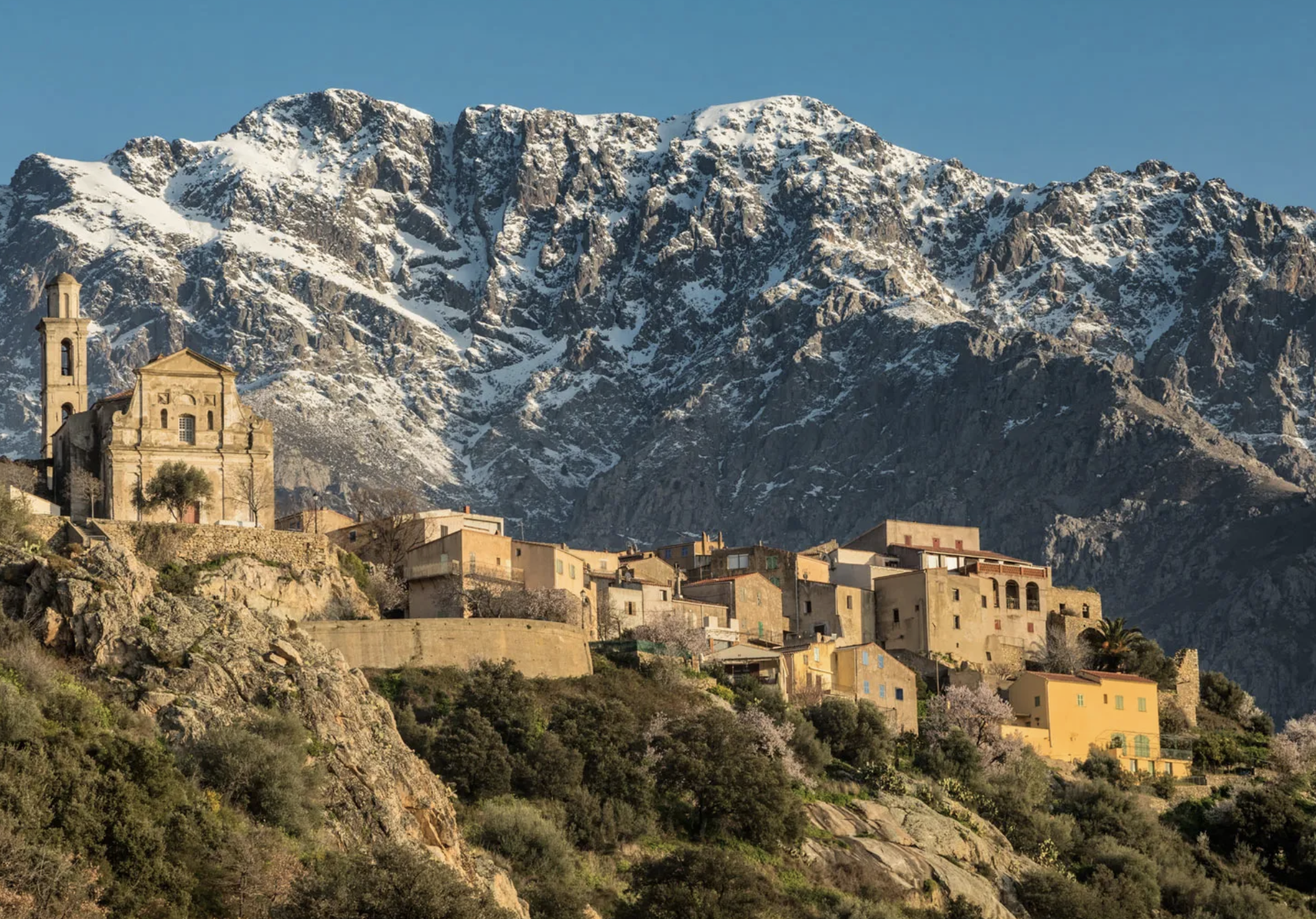
Don’t Miss
- Wander the streets of Bonifacio’s clifftop citadel early in the morning or just before sunset. It’s one of the most spectacular old towns anywhere in Europe.
- Spend a day exploring the Lavezzi Islands, where the water is every bit as clear as the Caribbean but unmistakably Mediterranean.
- Sail or hike into Girolata. The fact that there’s no road is exactly what keeps it so special.
- Drive through Corsica’s interior. Some of the island’s best moments happen far from the coast.
- Visit one of the local vineyards around Saint-Florent and try Corsican wines alongside local cheeses and charcuterie.
- Time your crossing of the Strait of Bonifacio around the weather, not your schedule.
- If you kiteboard or windsurf, don’t overlook this part of the Mediterranean. The wind that challenges sailors is exactly what makes this one of Europe’s best playgrounds for wind sports.
- Slow down. Corsica isn’t a place to race through. It’s a place to experience.
My Take
Some places become famous because they’re easy. Corsica isn’t one of them.
It’s rugged, mountainous, sometimes windy, occasionally challenging. And that’s exactly why I loved it.
Whether I was sailing across from Sardinia, wandering the streets of Bonifacio, driving roads that disappeared into the mountains, or watching the wind build across the Strait of Bonifacio, Corsica kept reminding me that Europe still has places that haven’t been polished into perfect tourist destinations.
They still feel real.
If you’re already visiting Sardinia, don’t stop there.
Take the ferry, or better yet, sail across if you have the chance.
You’ll experience two islands separated by less than an hour of water, yet shaped by completely different histories, cultures, and personalities.
For me, that’s what makes this corner of the Mediterranean so special. It’s not just about beautiful beaches or dramatic coastlines. It’s about discovering places that still feel authentic.
And in today’s world, that’s becoming harder and harder to find.
Written from Bonifacio, Corsica.
41° 23.980′ N, 009° 09.430′ E
CONTINUE EXPLORING
More of France & Europe
Where to Stay in Bonifacio · Back to France · Back to Europe · Where to Stay in Palma, Mallorca